

Finding a reliable hair extension supplier is one of the most important decisions for any hair salon, distributor,
or hair extension brand. There are hundreds of suppliers in the market, all claiming to offer premium human hair,
competitive wholesale prices, and excellent quality. But how can you tell which supplier is actually reliable?
The truth is that choosing a supplier is about much more than comparing prices or looking at product photos.
You need a partner who can provide consistent hair quality, maintain stable production, deliver orders on time,
and support your business as it grows. Whether you run a professional hair salon, manage a wholesale business,
or are building your own hair extension brand, here are eight important things to consider before choosing a
supplier.
1. Understand the Quality of the Human Hair
Hair quality should always be your first consideration.
Not all human hair extensions are the same. Different suppliers may use different raw materials, processing methods, and quality standards.
Before choosing a supplier, make sure you understand what you are buying.
Here are some important factors to check:
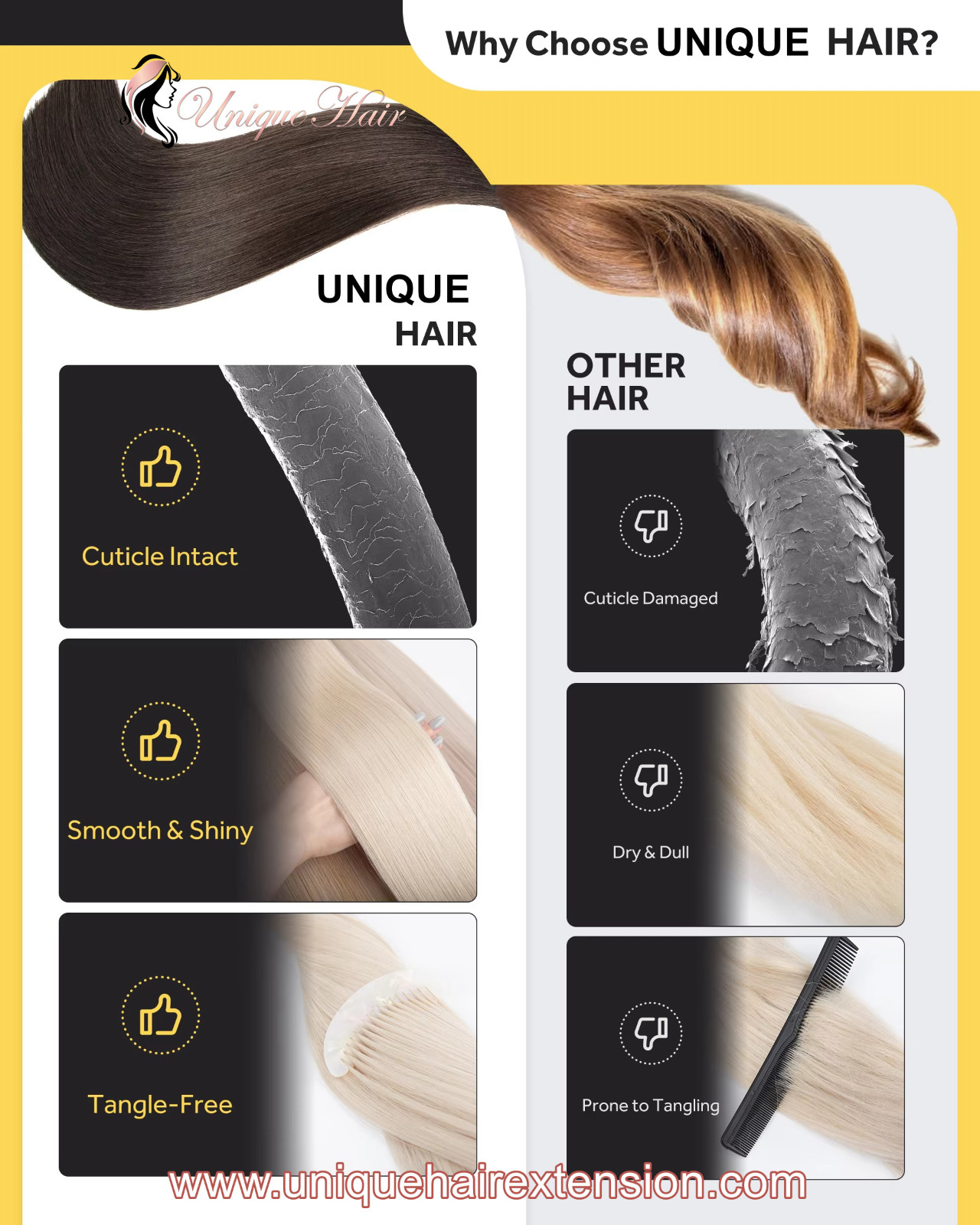
· Hair cuticle condition: Are the cuticles preserved, and are they aligned in the same direction?
· Hair texture: Does the hair feel natural, soft, and smooth?
· Hair thickness: Does the hair maintain a good level of fullness from top to bottom?
· Shedding and tangling: Does the hair shed excessively or become tangled after washing?
· Processing quality: Has the hair been over-processed or heavily treated to create a temporary smooth feeling?
One important point: Do not judge hair quality only by how it feels when you first open the package.
Some hair may look extremely smooth and shiny at first but behave differently after several washes.
Always test the hair before making a large purchase.
2. Always Request Samples Before Placing a Bulk Order
A professional supplier should be willing to provide samples so you can evaluate the actual product.
This is especially important if you are working with a new supplier or launching a new product line.
When testing hair samples, pay attention to:
· Softness and natural texture.
· Hair thickness and end fullness.
· Shedding during brushing.
· Tangling after washing.
· Color consistency.
· How the hair performs after repeated washing and styling.
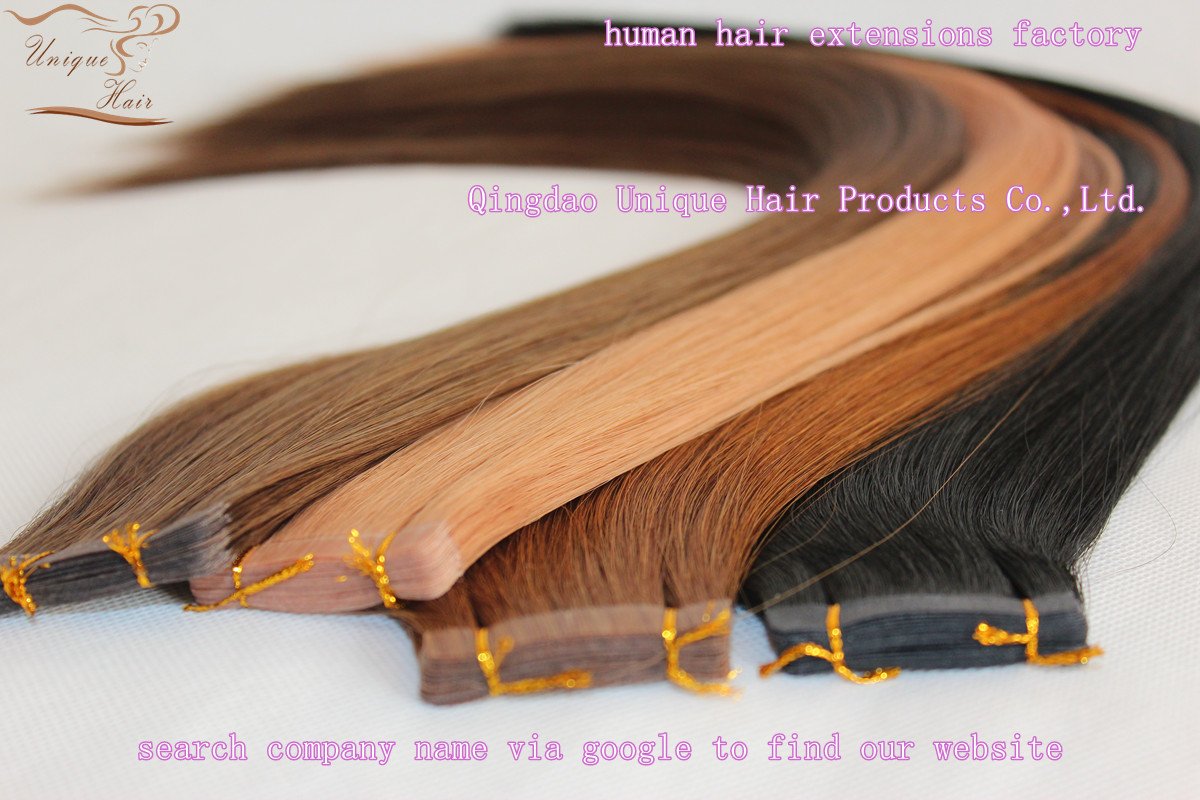
For tape-in extensions, you should also check the tape quality, bonding strength, and whether the tabs
remain secure under normal use.
For weft extensions, examine the stitching, construction, and thickness.
For keratin and nano tip extensions, pay attention to the quality and consistency of the bonds or tips.
A good sample gives you a much better understanding of what you are purchasing.
Our suggestion: Never make a large order based only on product pictures or a supplier's promises. Test the actual hair first.
3. Check Whether the Supplier Can Maintain Consistent Quality
This is one of the biggest challenges in the hair extension industry.
A supplier may provide an excellent sample, but can they deliver the same quality when you order
100 pieces, 500 pieces, or place your next order three months later?
For salons and wholesale businesses, consistency is extremely important.
Imagine that your customers love the hair from your first order. But when you reorder, the hair feels different,
the ends are thinner, or the color is not exactly the same. This can damage your reputation and affect
customer loyalty.
Before choosing a supplier, ask:
· Do you have clear quality standards for each product?
· How do you control quality during production?
· Do you inspect products before shipment?
· Can you maintain consistent quality across repeat orders?
· Can you keep approved samples as references for future production?
A reliable supplier should have a clear quality control process, not just rely on experience or visual inspection.
4. Understand the Difference Between Hair Types
Price differences between hair suppliers can be significant.
But why can two products that look almost identical have completely different prices?
One important reason is the quality and condition of the raw hair.
You may come across terms such as:
· Remy Hair
· Virgin Hair
· Raw Hair
· Cuticle Hair
· Non-Remy Hair
However, these terms are not always used consistently across the market.
Do not rely on product names alone. Ask suppliers to explain how the hair is sourced, processed, and prepared.
For example, cuticle preservation and alignment can be important factors in hair performance.
But a supplier should be able to explain what those claims mean for the specific product you are purchasing.
Also, ask whether the hair has been bleached, dyed, chemically processed, or treated with coatings.
Understanding these details helps you compare suppliers more accurately and
avoid paying premium prices for products that do not meet your expectations.
5. Compare Prices Based on the Same Specifications
Price is important, especially for wholesale buyers.
But comparing prices without comparing product specifications can be misleading.
A lower quotation does not necessarily mean you are getting a better deal.
Before comparing suppliers, make sure you are comparing the same:
· Hair quality and processing level.
· Product type and construction.
· Length and weight.
· Color and texture.
· Hair thickness and short-hair ratio.
· Packaging and branding requirements.
For example, two suppliers may quote different prices for 20-inch tape-in extensions.
But are they using the same hair quality? Are the weights identical? Are the ends equally full? Is the hair processed in the same way?
These details make a difference.
A better buying decision is not simply finding the lowest price. It is finding the best balance between quality, price, and long-term value.
6. Check the Supplier's Production Capacity and Quality Control
For salons, wholesalers, and growing hair extension brands, stable production is just as important as product quality.
A supplier should be able to explain how an order moves through the production process.
Depending on the product and supplier, this may include:
1. Raw hair selection and preparation.
2. Hair washing, bleaching, and coloring where required.
3. Hair processing and extension construction.
4. Product inspection and quality control.
5. Packaging and labeling.
6. Final inspection and shipment.
You should also understand which stages are completed in-house and which are outsourced.
Ask about production lead times, peak-season capacity, and how the supplier handles urgent orders or repeat orders.
A well-organized production process helps reduce misunderstandings and makes it easier to maintain consistent product standards.
7. Make Sure the Supplier Can Support Your Business Growth
Your business needs may change over time.
A salon may start with a small selection of tape-in extensions and later introduce genius wefts, nano tips, or keratin extensions.
A wholesale buyer may need more colors, lengths, and product categories as their customer base grows.
A new hair extension brand may need private-label packaging, custom colors, product labels, and customized product specifications.
Before choosing a supplier, find out whether they can support these requirements.
Important questions include:
· What hair extension methods do you offer?
· Can you customize colors and lengths?
· Do you support private-label and OEM orders?
· Can you customize logos and packaging?
· What are your minimum order quantities?
· Can you provide samples for new products?
· Can you support repeat orders as our business grows?
Choosing a supplier with flexible product options can make future business expansion much easier.
8. Communication and After-Sales Service Matter
A good supplier relationship does not end when the payment is made.
You need a supplier who communicates clearly, provides order updates, and takes responsibility when problems occur.
Before placing an order, pay attention to how the supplier handles your questions.
Do they understand your requirements?
Can they explain product specifications clearly?
Do they respond professionally when you raise concerns?
You should also discuss the defect policy before ordering, including how quality issues are reported,
what evidence is required, and what solutions are available.
Reliable communication can save you a lot of time and reduce unnecessary business risks.
Final Thoughts: Choose a Supplier You Can Grow With
Finding the right hair extension supplier takes time, research, and proper product testing.
Do not make your decision based only on attractive product pictures, impressive marketing claims,
or the lowest quotation.
Focus on what really matters:
· Genuine and clearly defined hair quality.
· Representative samples you can test.
· Consistent product standards.
· Reliable production and delivery.
· Flexible customization options.
· Professional communication and after-sales support.
For salon owners, a reliable supplier helps protect your reputation and keep your clients satisfied.
For wholesalers and hair extension brands, the right supplier can become an important part of your
long-term business growth.
Looking for a reliable supplier of premium human hair extensions?
We specialize in professional human hair extensions, including tape-in, invisible tape-in, genius weft, keratin tip,
and other popular extension methods.
From hair selection and processing to product manufacturing, quality inspection, packaging, and shipment,
we focus on maintaining consistent product standards throughout the process.
We also support custom colors, different product specifications, and private-label packaging for salons,
wholesalers, and hair extension brands.
If you are looking for a long-term supply partner, feel free to contact us.
Request a sample and experience the hair quality for yourself.
Finally, don't hesitate to email us at sales@uniquehairextension.com for more details.
Also, visit our INSTAGRAM to get more beautiful pictures and videos.
Qingdao Unique Hair Products Co.,Ltd.
www.uniquehairextension.com
sales@uniquehairextension.com
Whatsapp: +8613012555505

